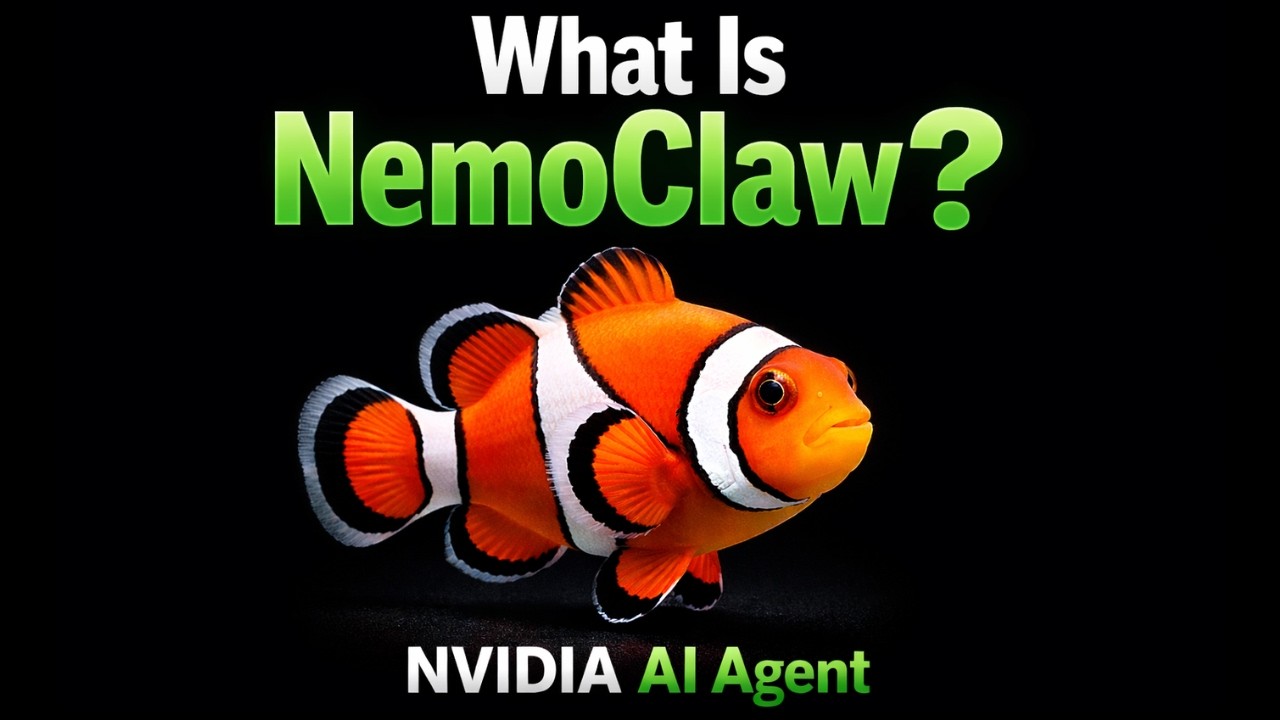
OpenClaw is the next ChatGPT according to NVIDIA CEO Jensen Huang — the fastest-growing open-source project in history, now backed by NVIDIA’s NemoClaw enterprise layer. Here is the full story of what OpenClaw is, how it got here, and why every business needs a strategy for it right now.
Jensen Huang Says OpenClaw Is “Definitely the Next ChatGPT” — Here Is Why the World Is Paying Attention
OpenClaw is the next ChatGPT — those were Jensen Huang’s words to CNBC’s Jim Cramer on Squawk on the Street on March 17, 2026, the morning after NVIDIA’s GTC conference wrapped in San Jose. And considering that the same CEO had already called OpenClaw “probably the most important software release, probably ever” two weeks earlier at the Morgan Stanley Technology conference, the statement was not a slip of the tongue or a polished talking point from a media handler. It was a considered, repeated position from the most important person in the AI hardware industry right now, delivered twice on two of the most-watched financial news programs in the world.
If you have not heard of OpenClaw yet, you are about to. And if you have heard of it but written it off as another GitHub project that went viral for a week and then disappeared, this article is going to change your mind about that.
What Jensen Huang Actually Said and Why It Lands Differently Coming From Him
When Jensen Huang says something is important, the AI industry tends to listen. This is not because he has a flawless track record of prediction — no one does. It is because he has been right about the big shifts in a way that very few executives have been. He pushed CUDA as a general-purpose computing platform a decade before most people understood why that mattered. He bet on large-scale AI training infrastructure at a time when most of the industry considered it a niche research project. NVIDIA’s current market position is what you get when those calls turn out to be right.
So when he compares OpenClaw to Linux, to HTML, to Kubernetes, and then says it is “the new computer” — and then says it is “definitely the next ChatGPT” in a separate interview two weeks later — the appropriate response is not to dismiss it as hype. The appropriate response is to understand what OpenClaw actually is and why it would cause someone with Huang’s pattern recognition to reach for those specific comparisons.
The specific quote from CNBC’s Squawk on the Street on March 17: “OpenClaw is definitely the next ChatGPT. The reason for its success is its simplicity. With a single command, anyone can create a digital agent that can perform tasks rather than just answering inquiries like traditional chatbots.”
That sentence — “perform tasks rather than just answering inquiries” — is the key distinction, and it is worth staying on for a moment before diving into the platform itself.
=> Jensen Huang just called it the next ChatGPT on CNBC. Find out what OpenClaw actually does — and why every business needs a strategy for it now.

The Difference Between Answering and Doing
ChatGPT changed how people interact with AI because it made the technology feel conversational. You could ask it anything in plain language and get a useful response. That was the breakthrough. For the first time, the barrier to getting something useful out of an AI model felt genuinely low.
But ChatGPT, Claude, Gemini, and every conversational AI that followed are fundamentally answer machines. You ask a question. They produce text. If you want to take that output and do something with it — send an email, book an appointment, write and run some code, update a spreadsheet, schedule a meeting, order something online — you have to leave the AI interface, do the task yourself, and come back if you need more help.
OpenClaw is not that. OpenClaw is an agent that actually executes tasks in your environment, on your behalf, without you manually doing the step-by-step work. It connects to your applications, reads and writes your files, runs code, interacts with websites, manages your calendar, and handles workflows from start to finish. You tell it what you want done. It does it.
That shift — from AI as information retrieval to AI as action execution — is what Jensen Huang means when he says it changes the category. ChatGPT made people realize AI could help them think. OpenClaw is the first thing that has made a large non-technical audience realize AI can actually do the work.
How Fast OpenClaw Grew — and What Those Numbers Mean
The growth statistics for OpenClaw are the kind that make analysts reach for the wrong word and call something “unprecedented” when they actually mean it. In this case, the word fits.
OpenClaw launched in late January 2026 and hit 60,000 GitHub stars within 72 hours. That was already a record pace. It hit 175,000 stars within two weeks. By the time Jensen Huang called it the most important software release at the Morgan Stanley conference in early March, it had crossed 210,000 stars. As of this writing, the project sits at over 250,000 GitHub stars.
For context: React, the JavaScript framework built by Facebook that became the foundation of a large portion of the modern web, took years to reach those numbers. Linux — the operating system that runs the internet, the world’s supercomputers, and most of the server infrastructure humanity depends on — took decades. Huang’s comparison to Linux was not random. He was making a specific, provable point about speed of adoption. “Linux took some 30 years to reach this level. OpenClaw in three weeks has now surpassed Linux.”
The numbers beyond GitHub stars tell the same story. OpenClaw now receives 1.5 million npm downloads per week. The ClawHub community marketplace — where developers publish skills, the plug-in modules that extend what the agent can do — has crossed 5,700 community-built skills. There are over 80 OpenClaw meetups scheduled globally. Native apps are live on iOS, Android, macOS, and Huawei’s HarmonyOS. The Chinese developer community responded to the launch so quickly that Huver co-founder Dongi Hugh noted “tech entrepreneurs in China responded immediately and launched new projects because they knew all of their competitors would be doing the same.”
This is not a project that went viral and then slowed down. The adoption curve has continued upward. And crucially, it has continued upward across geographies and technical skill levels — which is what distinguishes genuine platform adoption from a niche developer fad.
What OpenClaw Actually Does at the Ground Level
Strip away the GitHub stars and the CEO endorsements and what you have is a piece of software that runs on your own hardware — your Mac, your Windows PC, your Linux machine — and serves as a persistent, always-on agent that can take instructions from wherever you are and complete real tasks.
The interface is deliberately simple. You connect OpenClaw to your messaging apps — WhatsApp and Telegram are the main entry points — and from that point forward, sending a message to your OpenClaw instance is how you interact with it. You might send: “Draft an email to the vendor about the invoice discrepancy from last Tuesday, attach the PDF from my downloads folder, and schedule it to send at 9 AM tomorrow.” Or: “Go through my calendar for next week and find any conflicts, then propose reschedule options to the person whose meeting clashes.” Or simply: “Write a Python function to sort this CSV by date column, test it, and save the result.”
OpenClaw reads your instruction, interprets it, executes the steps, and reports back. It has persistent memory, meaning it remembers context across conversations — the vendor it knows you have been dealing with, the coding project it has been helping on, the preferences you have expressed about how you want things formatted. It can write its own new skills when it encounters a task its existing capabilities do not cover. And because it runs locally on your machine, your data — your files, your emails, your calendar — stays on your hardware rather than passing through a cloud server by default.

What Is NVIDIA NemoClaw
The OpenAI Twist: Creator Hired, Project Lives On
There is a plot development in the OpenClaw story that most coverage has treated as a footnote but which actually matters a lot for understanding the project’s future trajectory.
OpenAI hired OpenClaw’s creator, Peter Steinberger, away from the project. He is now working at OpenAI on what the company has not publicly described in detail. This is the same move OpenAI made with Sam Altman and several other transformative figures in the AI space — identify the person most visibly associated with a breakthrough development and bring them inside.
The difference is that OpenClaw, unlike most OpenAI products, is genuinely open source. Steinberger’s departure did not shut down the project or shift control to a single company. The community of contributors that had formed around OpenClaw continues to develop it, maintain it, and build on it. The ClawHub ecosystem — with its 5,700+ skills and growing — is largely community-driven and does not depend on any single person or organization to survive.
Jensen Huang addressed this directly. OpenClaw “gave the industry exactly what it needed at exactly the time,” he said. The comparison he reached for was Linux — another project that eventually separated from its creator in meaningful ways and became a durable piece of infrastructure because the community around it proved more resilient than any individual’s involvement.
Whether OpenAI uses Steinberger’s expertise to build something that competes directly with OpenClaw, or something complementary to it, remains to be seen. What is already clear is that OpenClaw’s future does not depend on that answer.
Every Company Needs an OpenClaw Strategy — Huang’s Clearest Statement
The most direct business-level statement Jensen Huang made about OpenClaw came from the GTC 2026 keynote stage, not from the CNBC interview. It was direct enough that it is worth quoting in full: “Every company in the world today needs to have an OpenClaw strategy, an agentic system strategy. This is the new computer.”
That statement — “every company” and “the new computer” — is not modulated business conference language. It is an unconditional directive aimed specifically at the enterprise buyers, investors, and decision-makers watching GTC. Huang was not saying OpenClaw might be interesting for forward-thinking teams. He was saying companies without an agentic AI strategy are in the same position as companies without an internet strategy in the mid-1990s.
NVIDIA’s own practice backs this up. NVIDIA’s internal teams deploy numerous OpenClaw instances to automate coding workflows and internal processes. The company’s own engineers are living the use case they are evangelizing to others, which is exactly the kind of internal adoption signal that makes external endorsements credible rather than promotional.
NVIDIA’s NemoClaw: What Comes After the Endorsement
NVIDIA’s position on OpenClaw is not simply that of a fan. It is that of an infrastructure provider building the enterprise safety layer on top of the fastest-growing platform in its category. NemoClaw, announced at GTC 2026, installs on top of OpenClaw and adds policy-based access controls, data isolation through the OpenShell runtime, and local model execution via NVIDIA Nemotron.
The NemoClaw announcement was made with Peter Steinberger on stage, which is notable given that he has since joined OpenAI. His presence at GTC to endorse the enterprise direction of the platform he created signals that the relationship between OpenClaw’s community roots and NVIDIA’s enterprise infrastructure is genuinely collaborative rather than competitive.
For businesses looking to deploy OpenClaw in environments where security, compliance, and data governance matter — which is effectively every regulated industry and every company that handles sensitive customer information — NemoClaw is the bridge between the project’s consumer-grade open-source origin and enterprise-grade production deployment.
The Bigger Story: Agentic AI Is the Next Layer
OpenClaw’s story is not really about one open-source project hitting a growth milestone. It is about the arrival of a behavioral shift in how AI is used at the individual and organizational level — the move from AI as a tool you consult to AI as an agent you deploy.
ChatGPT taught people to think of AI as a capable advisor. OpenClaw is teaching people to think of AI as a capable worker. That shift in mental model — from “what can I ask AI” to “what can I send AI to do” — has implications for software development, business processes, customer service, productivity tooling, and the nature of digital work itself. The AI industry has been building toward this transition for years. OpenClaw is the first product that made that transition feel real and accessible to a non-technical audience at scale.
Huang’s comparison to the Windows moment for personal computing was not arbitrary. Windows did not invent computing. It made computing accessible to people who were not programmers. OpenClaw has not invented AI agents. It has made AI agents accessible to people who are not AI engineers. That is the parallel he is drawing, and the adoption numbers suggest he is right to draw it.
FAQ
What is OpenClaw?
OpenClaw is an open-source autonomous AI agent that runs locally on your own hardware. Unlike chatbots that answer questions, OpenClaw executes real tasks — managing files, writing and running code, sending emails, scheduling meetings, and completing complex workflows — based on instructions sent through messaging apps like WhatsApp or Telegram.
Why did Jensen Huang call OpenClaw the next ChatGPT?
Huang said OpenClaw crosses the line between AI that answers questions and AI that completes tasks, making it a more fundamental shift in how people use AI than conversational models alone. He called it “the new computer” and compared its impact to Linux, Windows, HTML, and Kubernetes.
How fast did OpenClaw grow?
OpenClaw surpassed 250,000 GitHub stars faster than any project in history, outpacing Linux’s multi-decade growth in three weeks. It now records 1.5 million npm downloads weekly and has over 5,700 community-built skills on its ClawHub marketplace.
What happened to OpenClaw’s creator?
OpenClaw creator Peter Steinberger was hired by OpenAI. The project continues as a community-driven open-source initiative and does not depend on any single person’s continued involvement.
What is NVIDIA NemoClaw and how does it relate to OpenClaw?
NemoClaw is NVIDIA’s enterprise security and privacy layer that installs on top of OpenClaw. It adds policy-based access controls, data isolation through the OpenShell runtime, and local AI model execution through NVIDIA Nemotron, making OpenClaw safe for business and regulated industry deployment.
Does OpenClaw require technical knowledge to use?
The basic setup involves a single installation command. Interacting with the agent is done through natural language in messaging apps. Advanced configuration of custom skills and workflows benefits from some technical knowledge, but the core functionality is designed to be accessible to non-developers.
Is OpenClaw free?
Yes. OpenClaw is open source and free to download and use. Community-contributed skills on ClawHub are also largely free. Commercial and enterprise deployments may layer paid infrastructure — like NVIDIA NemoClaw or cloud hosting services — on top of the base platform.
OpenClaw went from a GitHub project to the most downloaded open-source software in history in three weeks. The CEO of the most powerful company in AI just called it the next ChatGPT on live television. NVIDIA built an entire enterprise product to support it. And the creator is now at OpenAI, which means the people most closely watching what this category can become are all inside the tent now. Whether you are a business owner, a developer, or someone who wants an AI that actually does things rather than just talks about them — the time to understand OpenClaw is right now, before it becomes the infrastructure everyone else is already running on.
=> 250,000 GitHub stars in three weeks. The most important software release ever, according to NVIDIA’s CEO. Read the full story and don’t get left behind.