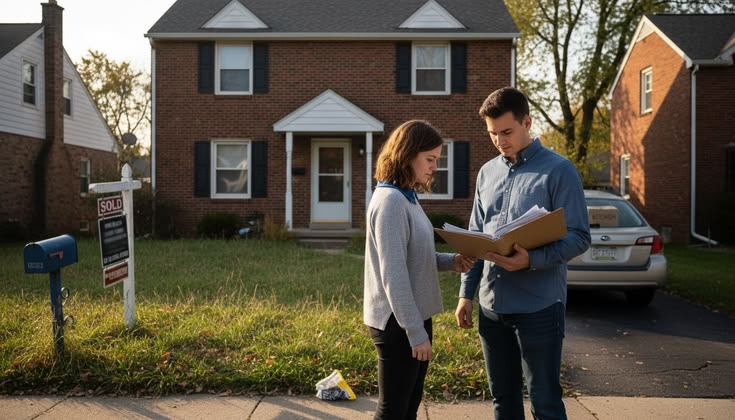
Emergency housing assistance near me — this guide covers 5 programs that provide immediate help with eviction, rent arrears, and homelessness in 2026. Find emergency rent help programs in your area and get help today.
Facing Eviction or Homelessness? 5 Emergency Housing Assistance Programs That Can Help You TODAY
Emergency housing assistance near me is the search that happens when things have gotten serious — when the eviction notice is already on the door, when the bank account is empty, when the options feel like they have run out. If that is where you are right now, this article is written specifically for you. There are real programs that move quickly, that exist precisely for moments like this one, and that have helped millions of families in housing crisis get back on stable ground.
This guide covers five of the most accessible emergency housing assistance programs available in 2026, how each one works, who qualifies, and how to access help today — not next month, not after a six-month waitlist, but right now.
First: Understand That Help Exists and You Have More Time Than You Think
When you are facing eviction or housing instability, the fear and urgency can make everything feel like it is collapsing at once. One of the most important things to understand early is that an eviction notice is not the end of the process — it is the beginning of a legal timeline that typically gives you more time to act than most people realize.
In most states, the eviction process from first notice to actual physical removal takes a minimum of several weeks and often one to three months when you factor in required notice periods, court filing timelines, hearing dates, and the judgment-to-removal process. That window is your working time. Every day you spend in paralysis is a day you are not using to access programs that can stop the process entirely.
The programs below are specifically designed for people in your situation. They move faster than standard housing assistance. They are funded for exactly this purpose. And the first step to accessing any of them is simply making contact.
Program 1: Emergency Rental Assistance Programs
Emergency Rental Assistance — ERA — programs are the fastest and most direct form of housing crisis help available in 2026. These programs pay past-due rent, current rent, and in some cases up to three months of future rent directly to your landlord on your behalf, stopping the eviction process and giving you time to stabilize.
ERA programs are funded through a combination of federal appropriations and state budget allocations. They are administered at the state and local level — your city, county, or state housing agency manages them. Because they are locally administered, availability and program specifics vary by location. Some areas have robust ERA programs with active funding. Others have waitlists or limited availability depending on current demand and funding cycles.
Who Qualifies for Emergency Rental Assistance
Most ERA programs require:
-
Income at or below 80% of Area Median Income for your location, with priority for households at or below 50%
-
Documentation of housing instability — an eviction notice, a past-due rent letter from your landlord, or a written statement that your housing situation is at risk
-
Evidence of financial hardship — job loss, reduced hours, unexpected medical expenses, or similar documented circumstances that affected your ability to pay rent
-
US citizenship or eligible immigration status in most programs
The documentation requirement is less formal than you might expect. A letter from your landlord showing past-due rent, combined with a pay stub showing reduced income or a termination notice, is typically sufficient to meet the hardship documentation standard. You do not need to be in court proceedings to qualify — programs prefer to intervene before eviction reaches the legal stage.
How to Find ERA Programs in Your Area
Call 211. This is the single fastest path to locating active ERA programs in your county. The 211 service is available by phone and online, operates in every US county, and maintains a continuously updated database of local emergency assistance resources including active rental assistance programs. Tell them you are facing eviction and need emergency rental help — they will connect you with programs currently accepting applications in your area.
Your state’s housing agency website also lists ERA programs. Search your state name plus “emergency rental assistance 2026” for current program information.
=> Get emergency housing help immediately — check available programs in your area right now. It is free, takes two minutes, and could stop your eviction this week.

Program 2: HUD Emergency Solutions Grants — Rapid Rehousing
The Emergency Solutions Grant program — ESG — is a federal program administered by HUD that funds emergency shelter, rapid rehousing, and homelessness prevention services through local nonprofits and government agencies.
The rapid rehousing component is specifically relevant for households that have already lost housing or are on the verge of losing it. Rapid rehousing programs can cover:
-
Security deposits for a new rental
-
First and last month’s rent
-
Short-term rental subsidies — typically one to three months — to help you establish housing stability in a new unit
-
Case management services to help address the circumstances that led to the housing crisis
The homelessness prevention component covers similar costs for households that are still housed but have received an eviction notice or are at imminent risk of losing their current housing.
ESG-funded programs do not have a single application portal — they are administered by local nonprofits, community action agencies, and homeless service providers that have received ESG funding from their state. Your local 211 service will know which ESG-funded providers are operating in your area and whether they are currently accepting clients.
What to Bring When You Contact an ESG Provider
When you reach out to an ESG-funded provider, having the following information ready speeds up the intake process significantly:
-
Your eviction notice or documentation of housing instability
-
Proof of income — or documentation of current unemployment or income loss
-
Identification for all household members
-
Information about your current landlord and the amount of past-due rent
You do not need to have everything perfectly organized. ESG providers are experienced in working with people in crisis and will help you gather what is needed. The most important step is making contact.
Program 3: Community Action Agency Emergency Assistance
Community Action Agencies — CAAs — are nonprofit organizations operating in virtually every county in the United States, funded through the federal Community Services Block Grant and a variety of state and local sources. They are among the most accessible and fastest points of contact for emergency housing help of any kind.
CAAs provide direct emergency financial assistance for rent, utilities, and other urgent needs. They also connect households to every other available assistance program in the county — functioning as a one-stop intake point for people in financial or housing crisis. A single call or visit to your local Community Action Agency can surface multiple forms of assistance simultaneously rather than requiring you to contact each program separately.
Unlike government agencies, Community Action Agencies are designed to be welcoming and accessible to people in crisis. They are staffed by people whose entire job is helping households in exactly the situation you are in. The intake process is typically faster and more human than what you experience at a government office.
To find your local Community Action Agency, call 211 or search your county name plus “Community Action Agency” online. Most have walk-in hours in addition to phone intake.
Emergency Utility Assistance Through CAAs
Many CAAs administer LIHEAP — the Low Income Home Energy Assistance Program — along with their emergency housing programs. If your housing crisis includes overdue utility bills that are contributing to the instability, utility assistance from your CAA can be accessed alongside emergency rent help. Keeping utilities on protects your housing situation and removes one of the financial pressures driving the crisis.
Program 4: Emergency Housing for Domestic Violence Survivors
If your housing crisis is connected to domestic violence — if you are fleeing an unsafe home, if your abuser controls your housing situation, or if leaving requires finding somewhere safe to go immediately — there are emergency housing resources specifically designed for your situation that operate outside the standard housing assistance system.
The National Domestic Violence Hotline — available 24 hours a day by phone and text — connects survivors to local domestic violence shelters and emergency safe housing in every US state. Local domestic violence organizations operate emergency shelters that provide immediate safe housing, usually at no cost, for survivors and their children. These shelters typically provide shelter, meals, safety planning, legal advocacy, and connections to longer-term housing options.
Beyond emergency shelter, domestic violence survivors have federal housing protections under the Violence Against Women Act — VAWA — that apply to Section 8, public housing, and other federally assisted housing. VAWA protections mean:
-
A landlord receiving federal housing assistance cannot evict you based on domestic violence, dating violence, sexual assault, or stalking
-
You can request an emergency transfer to a different unit if your current housing puts you at risk
-
Your Section 8 voucher cannot be terminated because of incidents related to domestic violence
If you are currently in federally assisted housing and your landlord is attempting to evict you based on domestic violence-related circumstances, you have legal protections. Contact a HUD-approved housing counselor or a local legal aid organization immediately to assert these protections before any court proceedings advance.
=> If you are in a housing emergency right now, do not wait. Check what emergency assistance is available in your area immediately — free, no obligation, and programs may be able to help within days.

Program 5: Local Nonprofit and Faith-Based Emergency Rental Help
Beyond government-funded programs, a significant volume of emergency housing assistance flows through local nonprofit organizations and faith-based community organizations — churches, synagogues, mosques, and community foundations that maintain emergency assistance funds for local residents in crisis.
These organizations often move faster than government programs because they are not constrained by federal documentation requirements or lengthy approval processes. A local church’s emergency assistance fund might cut a check to your landlord within 48 hours of your request. A community foundation’s rapid response fund might cover a month’s rent while your ERA application is processing.
The amounts available through individual organizations are typically smaller — $200 to $1,000 per household per incident in most cases — but in a housing crisis, a partial payment that convinces a landlord to pause eviction proceedings while you access larger assistance can be the difference that saves your housing.
How to find these resources:
Call 211 and specifically ask about faith-based and nonprofit emergency rental assistance in your zip code. The 211 database includes community organizations that most online searches do not surface.
Walk into local churches, particularly larger ones in your community. Many operate assistance programs that are not publicly advertised but are available to people who ask. The worst outcome of asking is being told no. The best outcome is getting your rent paid this week.
Contact the Salvation Army, Catholic Charities, and Jewish Family Services in your area — all three operate national networks of local emergency assistance programs covering housing, utilities, and food.
What to Do Right Now If You Are Facing Eviction — A Step-by-Step Action Plan
If you are in a housing crisis today, here is the sequence of actions that gives you the best chance of resolving it quickly:
Step 1: Call 211 today. Tell them you are facing eviction and need emergency rental assistance. Ask specifically what programs are currently active in your county and which ones have the fastest processing times. Get names and phone numbers.
Step 2: Contact your landlord in writing. If you have not already, reach out to your landlord and let them know you are actively seeking rental assistance and working to resolve the past-due balance. Many landlords will pause or delay formal eviction proceedings while a tenant demonstrates active effort to pay — particularly if they know rental assistance is coming. Get any communication in writing.
Step 3: Apply to every program 211 refers you to simultaneously. Do not apply to one program and wait for a response before applying to others. Apply to all of them at the same time. The first one to process your application is the one that helps you — the others can be cancelled if you receive help elsewhere.
Step 4: Contact your local Community Action Agency. Walk in or call the same day. They often have emergency funds that move faster than government ERA programs and can bridge the gap while larger assistance is processing.
Step 5: Know your legal rights. An eviction notice is not a court order. You cannot be removed from your home without a court judgment and a formal removal order. If your landlord attempts to change locks, remove your belongings, or shut off utilities without a court order, that is illegal self-help eviction — contact legal aid immediately.
Step 6: Contact legal aid if court proceedings have started. Many areas have free legal aid organizations that represent tenants in eviction proceedings at no cost. Having legal representation significantly increases the likelihood of a favorable outcome and gives you more time to secure rental assistance. Legal aid can often arrange continuances that buy additional weeks while you access financial help.
FAQs About Emergency Housing Assistance
How fast can emergency rent help arrive?
It varies by program. Some local nonprofit programs can issue payment within 24 to 72 hours. Government ERA programs typically process within two to four weeks. Applying to multiple programs simultaneously is the best strategy for getting help as quickly as possible.
Can I get help if I already have a court date for eviction?
Yes. Having a court date does not disqualify you from emergency rental assistance. Contact ERA programs immediately and inform them of your court date — many programs can expedite processing when a court hearing is imminent. Also contact legal aid to request representation at the hearing.
Does the landlord have to accept rental assistance?
In most states, landlords are not legally required to accept third-party rental assistance payments. However, the vast majority do — it is in their financial interest to receive full past-due payment rather than proceeding with a costly eviction. If your landlord refuses rental assistance, document that refusal and contact a housing counselor or legal aid attorney.
What if I have already been evicted and need emergency shelter?
Contact 211 for emergency shelter resources in your county. ESG-funded rapid rehousing programs can help you secure new housing quickly with security deposit and first month’s rent assistance. Local shelters can provide immediate safe housing while you work toward a longer-term solution.
Can undocumented immigrants receive emergency housing assistance?
It depends on the program. Federally funded programs require citizenship or eligible immigration status. Many locally funded programs and nonprofit organizations provide emergency assistance regardless of immigration status. Call 211 and ask specifically about programs available to your household — they can identify options appropriate for your situation.
What documents do I need for emergency rental assistance?
Most programs require proof of identity, proof of current housing (lease or landlord contact), documentation of past-due rent, and evidence of financial hardship. Requirements are typically flexible for households in genuine crisis — contact the program and ask what they need rather than assuming you must have everything perfect before applying.
The Worst Thing You Can Do Right Now Is Wait
Housing crises feel paralyzing. The fear of what happens next, the shame of asking for help, the uncertainty about whether any program will respond in time — all of it pushes toward inaction at the exact moment when action matters most.
Every day you wait is a day the legal clock advances. Every day you do not call 211 or contact a Community Action Agency or apply to an ERA program is a day of available help you are not accessing.
The programs in this guide exist for this exact situation. They are funded. They are staffed by people whose job is to help you. They have helped millions of families in housing crisis find stable ground. The only question is whether you make contact today.
Pick up the phone, call 211, and tell them what you are facing. That one call sets everything else in motion.
=> Get emergency housing help immediately — check what programs are available in your area right now. It is free, takes two minutes, and help may be available faster than you think.