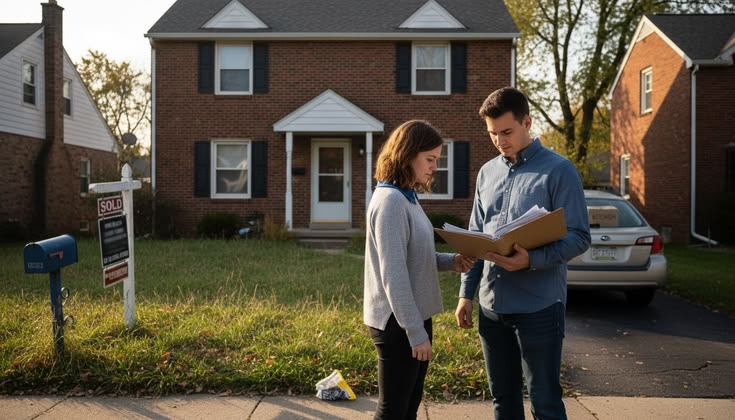
How to apply for Section 8 in 2026 — this step-by-step housing choice voucher application guide covers eligibility, waitlist tips, documents needed, and how to improve your chances of fast approval for rental assistance.
How to Apply for Section 8 in 2026: Step-by-Step Housing Choice Voucher Application Guide
How to apply for Section 8 in 2026 is one of the most searched housing questions in America right now — and for good reason. Rent has continued climbing in cities and suburbs across the country, and the Housing Choice Voucher program remains the single largest federal tool available to help low-income families, seniors, and disabled individuals afford stable housing in the private rental market.
If you have been trying to figure out where to start, what documents you need, how the waitlist works, and what you can do to improve your chances — this guide walks you through every step clearly and honestly, without the confusing government language that makes most housing information harder to use than it needs to be.
What Section 8 Actually Is — And How It Works
Before going through the application steps, it helps to understand what you are applying for — because a lot of people have a vague idea of Section 8 without knowing the specifics of how the benefit actually functions.
Section 8 — officially called the Housing Choice Voucher program — is a federal rental assistance program administered by local Public Housing Agencies and funded by the US Department of Housing and Urban Development. When you receive a voucher, you use it in the private rental market. You find an apartment or house from a private landlord who agrees to participate in the program. The voucher covers the difference between 30% of your adjusted monthly income and the fair market rent for your area up to the program’s payment standard.
In plain terms: you pay 30% of what you actually earn each month toward rent. The program pays the rest directly to your landlord. If your monthly adjusted income is $800, you pay $240 per month in rent regardless of what the unit actually costs — as long as it falls within the program’s payment standard for your area.
That is a genuinely life-changing benefit for families paying 50%, 60%, or more of their income on rent in today’s housing market. The challenge is that demand for vouchers far exceeds the supply in most areas, which is why waitlists exist and why navigating the process correctly matters so much.
Step 1: Find Your Local Public Housing Agency
Section 8 is not a single national program you apply to in one place. It is administered locally by Public Housing Agencies — called PHAs — which are city or county-level organizations that manage vouchers for their specific area. To apply for Section 8, you need to apply through the PHA that serves the area where you want to live.
You can have applications open at multiple PHAs simultaneously. Many housing advocates recommend applying at every PHA within a reasonable geographic range — not just your current city — because waitlist times vary dramatically by location. A PHA in a smaller city 30 miles away may have a much shorter waitlist than the PHA in your current metro area.
To find PHAs in your area, search your city or county name plus “Public Housing Authority” or “Housing Choice Voucher program.” HUD also maintains a national PHA directory on its official website organized by state.
Call or visit each PHA’s website to find out whether their waitlist is currently open. Many PHAs keep their waitlists closed for extended periods when they have more applicants than projected voucher availability. When a PHA opens its waitlist — which may happen annually or less frequently — it is often for a limited window. Missing that window means waiting for the next opening.
Sign up for notifications from PHAs in your area if that option is available. Some PHAs maintain email lists to notify people when their waitlist is opening.

Step 2: Confirm You Meet the Basic Eligibility Requirements
Before investing time in an application, confirm your household meets the basic eligibility criteria. Applying when you do not qualify wastes your time and the PHA’s processing capacity.
Income Limits
The standard income limit for Section 8 is 50% of the Area Median Income for your location. However, federal law requires that at least 75% of new vouchers go to households at or below 30% of AMI — meaning the program overwhelmingly serves the lowest-income households and gives them priority.
Since AMI varies by location, your exact income limit depends on where you are applying. A family of four in a high-cost city like Seattle has a higher dollar threshold than the same family in a lower-cost rural area. The PHA will give you the current income limits for your specific area when you inquire.
Citizenship and Immigration Status
Section 8 is available to US citizens and certain eligible non-citizens — primarily lawful permanent residents, refugees, asylees, and people with specific humanitarian immigration statuses. Mixed-status households — where some members are eligible and others are not — can apply for benefits on behalf of the eligible members only. Assistance is then prorated based on the number of eligible household members.
Background Check
PHAs conduct background checks as part of the application process. Certain convictions — particularly drug-related manufacturing or production convictions — are mandatory disqualifiers under federal rules. For other criminal history, PHAs have discretion. Many PHAs have moved away from blanket exclusions based on criminal history in recent years, though policies vary. Apply honestly and disclose any history — PHAs that practice fair chance housing policies evaluate applications on a case-by-case basis.
Step 3: Gather Your Documents Before You Apply
Having your documents organized before you start the application prevents delays and back-and-forth with the PHA that can slow your place in the process.
Here is what most PHAs require:
Proof of identity for all household members. Government-issued photo ID for adults — driver’s license, state ID, or passport. Birth certificates for children. Social Security cards or documentation of Social Security numbers for all household members applying for benefits.
Proof of current address. A recent utility bill, lease agreement, or official mail in your name showing your current residence.
Proof of income for all household members. This is the most critical document category. Include two to three recent pay stubs for employed household members, Social Security award letters or benefit statements, unemployment benefit documentation, child support or alimony documentation, and any other regular income sources. If a household member has no income, you will certify that on the application.
Documentation of any priority factors. If your household qualifies for priority status — homelessness, veteran status, disability, domestic violence survivor — gather documentation supporting that status. This is important because priority status can significantly affect how quickly your application moves.
For veterans, a DD-214 discharge document establishes military service. For disability, an SSI or SSDI award letter or a letter from a licensed medical provider documenting the nature and severity of the disability typically suffices. For domestic violence, a signed statement, a protective order, or documentation from a shelter or service provider is generally accepted.
Step 4: Submit Your Application During an Open Enrollment Window
When a PHA opens its waitlist, apply as early in the window as possible. Many PHAs use a lottery system among applications received during the open enrollment period — meaning applications submitted on day one and day fifteen of a two-week window have the same chance of selection. But some PHAs use a first-come, first-served queue, meaning earlier applications get earlier waitlist positions.
The safest approach is to apply the moment you hear a waitlist has opened. Set up notifications, check PHA websites regularly, and be prepared to submit quickly when the window opens.
Most PHAs now accept applications online through their official portal. Some still accept paper applications or in-person submissions. Online applications are generally processed faster and give you a confirmation number you can use to check your status.
Complete every section of the application fully and accurately. Incomplete applications are often returned or placed at the back of the queue. Inaccurate information — particularly about income or household composition — can result in disqualification, so honesty throughout the application is essential.

Step 5: Understand the Waitlist — And What Happens While You Wait
Once your application is submitted and accepted onto a waitlist, you enter what is often the longest and most frustrating part of the process. Waitlist times in major metro areas can range from one year to five years or more depending on the city and the PHA’s annual voucher turnover.
Here is what you need to do while you wait:
Keep your contact information current. This is the single most common reason people lose their waitlist position after waiting months or years. If your phone number, email address, or mailing address changes and you forget to update it with the PHA, you may miss a critical notification that results in removal from the waitlist. Update your contact information with every PHA you are on the waitlist with whenever anything changes.
Respond to all PHA correspondence immediately. PHAs periodically send waitlist confirmation notices — often annually — that require you to confirm you are still interested and still in need of assistance. Missing these confirmations typically results in automatic removal from the waitlist. Treat any letter, email, or call from a PHA as urgent and respond the same day if possible.
Apply to other PHAs while you wait. Being on one waitlist does not prevent you from being on others. Continue applying to additional PHAs, particularly in areas where waitlists may be shorter or new openings are announced.
Check for changes in your priority status. If your household situation changes in a way that elevates your priority — you experience a domestic violence situation, a family member receives a disability determination, you become homeless or are served an eviction notice — contact the PHA immediately to update your application with the new priority documentation. Priority changes can move your position significantly.
Step 6: The Eligibility Interview and Voucher Issuance
When your name reaches the top of the waitlist — or when the PHA contacts you because your waitlist position has come up — you will be invited to an eligibility interview. This is a formal verification appointment where the PHA confirms your household composition, income, immigration status, and any priority factors before issuing your voucher.
Bring all of your original documents to this appointment. The PHA will verify the information on your application against the documents you provide. If your income or household composition has changed since you applied, disclose those changes accurately at this stage.
If you pass the eligibility interview, the PHA issues your Housing Choice Voucher. The voucher has a defined search period — typically 60 to 120 days — during which you must find a qualifying rental unit. Some PHAs offer extensions if you are actively searching but have not yet found a unit.
Step 7: Finding a Unit and Completing the Process
Once you have your voucher, finding a landlord who accepts Section 8 is your next challenge. Not all landlords participate in the program, though the number of participating landlords has grown in recent years — and some states have passed laws prohibiting landlords from refusing to rent to voucher holders.
When you find a potential unit, the PHA must inspect it to confirm it meets Housing Quality Standards — a set of basic habitability and safety requirements. The unit must pass inspection before your lease can begin and before the PHA will start making payments to the landlord.
After the unit passes inspection, you sign a lease with the landlord and a Housing Assistance Payments contract is established between the PHA and the landlord. Your portion of rent — 30% of your adjusted income — is paid directly to the landlord. The PHA’s portion is paid separately and directly.
Section 8 Waiting List Tips That Actually Make a Difference
Beyond following the steps above correctly, these practical tips give your application the best chance of moving as efficiently as possible:
Apply to every PHA within a reasonable commuting range, not just your closest city’s PHA. Smaller PHAs in surrounding areas frequently have shorter waitlists with the same federal benefit.
Apply immediately when any waitlist opens. Procrastinating even by a few days can mean a significantly later waitlist position in first-come, first-served systems.
Document every priority factor your household qualifies for. Veteran status, disability, homelessness, and domestic violence history all carry weight — but only if documented and submitted with your application.
Keep paper copies of every confirmation number, application receipt, and correspondence from every PHA you apply to. Disputes about waitlist positions happen, and having your own records protects you.
Check your spam folder regularly for email communications from PHAs. PHA email notifications often end up filtered.
FAQs About Section 8 in 2026
How long is the Section 8 waitlist in 2026?
It varies enormously by location. Major cities like New York, Los Angeles, and Miami have waitlists measured in years — some over five years. Smaller cities and rural PHAs often have shorter waits, sometimes under a year. The only way to know is to contact your local PHA directly.
Can I apply for Section 8 in a city where I do not currently live?
Yes. You can apply to any PHA regardless of where you currently live. Some PHAs have local preference policies that give priority to current residents, but you are not prohibited from applying outside your current area.
Does my income need to be zero to qualify for Section 8?
No. Income limits are based on a percentage of Area Median Income for your location. Working households qualify — the program is designed for low-income working families as well as unemployed households.
What happens if my income changes after I receive a voucher?
Your rent contribution adjusts. If your income increases, your 30% share increases proportionally and the PHA’s contribution decreases. If your income decreases, your contribution decreases. You report income changes to your PHA at your annual recertification — and some PHAs require interim reporting of significant income changes.
Can I move to a different city after I receive a Section 8 voucher?
Yes. After an initial period — typically 12 months — Housing Choice Vouchers are portable. You can transfer your voucher to another PHA jurisdiction if you want to move to a different city or state. This is called portability and requires coordination between the sending and receiving PHAs.
Can I be on multiple Section 8 waitlists at the same time?
Yes. Applying to multiple PHAs simultaneously is not only allowed but strongly recommended. Receiving a voucher from one PHA does not automatically remove you from others — though you should withdraw from other waitlists once you accept a voucher to keep program resources available for others.
The Wait Is Long — But the Benefit Is Worth Starting Today
The Section 8 process is not quick. That is the honest reality, and anyone who tells you otherwise is not giving you the full picture. Waitlists in high-demand areas are measured in years, not months. The paperwork is real. The income verification is thorough.
But the households that are living in stable, affordable housing today with a Section 8 voucher are the ones that applied two, three, or four years ago — and waited. The households that decided the waitlist was too long or the process too complicated are still paying full market rent, still stretched, still one missed paycheck from a housing crisis.
Every month you delay applying is a month added to the back of the timeline. The best time to apply for Section 8 was last year. The second best time is right now.