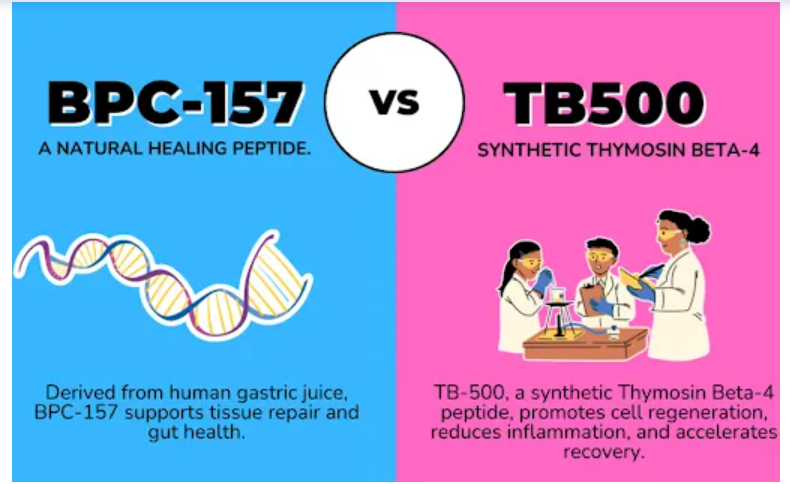
BPC-157 vs TB-500 — two of the most researched recovery peptides available today. This guide breaks down how each one works, what they heal best, and which one fits your goals.
BPC-157 vs TB-500: Which Peptide Is Actually Better for Recovery and Healing?
BPC-157 vs TB-500 is one of the most searched questions in the recovery and research peptide space right now — and for good reason. Both compounds have generated serious scientific interest for their ability to accelerate tissue repair, reduce inflammation, and support the body through injury recovery. But they are not the same thing, and choosing the wrong one for your research focus means leaving results on the table.
This article breaks down both peptides side by side — what they are, how they work, what the research actually shows, and which one makes more sense depending on the application. By the end, you will have a clear picture of both compounds without needing a biochemistry degree to follow along.
What Is BPC-157?
BPC-157 stands for Body Protection Compound-157. It is a synthetic peptide derived from a protein naturally found in human gastric juice — yes, your stomach. Researchers first isolated it from gastric secretions while studying how the gut protects and repairs its own lining. What they found was a 15-amino acid sequence with remarkable tissue-healing properties that extended well beyond the gut itself.
The compound works primarily by promoting VEGF — vascular endothelial growth factor — which triggers the formation of new blood vessels at injury sites. More blood vessels means more oxygen, more nutrients, and faster cellular repair. It also downregulates pro-inflammatory cytokines like TNF-α and IL-6, which are the compounds your body releases that cause swelling, pain, and prolonged recovery time.oathresearch+1
What makes BPC-157 particularly interesting to researchers is its specificity. It targets the local injury site, delivers concentrated healing signals directly to damaged tissue, and has shown an especially strong track record in tendon, ligament, joint, and gastrointestinal research.
A 2025 systematic review analyzed 36 preclinical studies on BPC-157 and found compelling evidence for musculoskeletal healing across multiple tissue types — tendons, muscles, ligaments, and bone. Notably, studies on Achilles tendon injuries showed 30–40% faster healing compared to controls, with improved biomechanical strength and more organized collagen alignment.
What Is TB-500?
TB-500 is a synthetic fragment of Thymosin Beta-4 (TB4), a naturally occurring protein found in virtually every cell of the human body. While BPC-157 comes from the gut, TB4 is a ubiquitous cellular protein — it is involved in how cells move, how tissues regenerate, and how blood vessels form in response to injury and stress.
TB-500 works differently from BPC-157 at the molecular level. Its primary mechanism involves upregulating actin — a structural protein essential for cell migration and tissue repair. When injury occurs, cells need to physically move to the site of damage to begin rebuilding. TB-500 accelerates that migration, helps new blood vessels grow systemically, and reduces scar tissue formation by promoting cleaner, more functional tissue regrowth.
Where BPC-157 is local and targeted, TB-500 is systemic. It does not just focus on one injury site — it activates repair processes body-wide, making it particularly relevant in research contexts involving widespread soft tissue damage, cardiovascular injury, or systemic inflammation.
Research data supports this systemic reach. In muscle injury models, TB-500 showed 61% faster healing compared to controls. In cardiac repair studies, small pilot trials using thymosin beta-4 to prime stem cells in heart attack patients showed improved exercise capacity and cardiac function at six months with no major complications.
BPC-157 vs TB-500: Head-to-Head Breakdown
Here is a direct look at how these two peptides compare across the most important research dimensions:
| Feature | BPC-157 | TB-500 |
|---|---|---|
| Origin | Derived from gastric juice protein | Synthetic fragment of Thymosin Beta-4 |
| Mechanism | VEGF promotion, cytokine suppression | Actin upregulation, cell migration |
| Healing Focus | Local / targeted | Systemic / body-wide |
| Best For | Tendons, ligaments, joints, gut | Muscle, cardiovascular, broad soft tissue |
| Inflammation | Reduces local pro-inflammatory cytokines | Reduces systemic inflammation |
| Speed of Results | Faster for tendons and gut (days to weeks) | 1–3 weeks for broader tissue repair |
| Angiogenesis | Local blood vessel formation at injury site | Systemic blood vessel and endothelial repair |
| Scar Tissue | Reduces fibrosis at the injury site | Reduces fibrosis body-wide |
| Research Stage | Extensive preclinical, emerging human data | Preclinical strong, limited human trials |
Check Here:
“Tendon, muscle, or gut — find the exact peptide built to repair it.“

BPC-157 vs TB-500
Where BPC-157 Wins
If the research application centers on connective tissue — specifically tendons, ligaments, and joints — BPC-157 has the most direct and well-documented evidence.
Twelve separate studies have specifically examined tendon healing with BPC-157, consistently finding accelerated Achilles tendon recovery, improved tendon-to-bone healing after rotator cuff repair, and stronger tissue with better collagen organization. These are not soft results. These are measured outcomes — researchers tested the force required to re-tear repaired tissue and found it meaningfully higher in BPC-157 groups.
BPC-157 also stands alone in gut research. No other peptide has shown the same gastrointestinal protective effects. Studies have demonstrated protection against intestinal damage, improved mucosal integrity, accelerated healing of ulcers, and even organ-protective effects on the liver and kidney under stress conditions. For any research protocol involving gut health, BPC-157 is the clear choice.
The neurological angle is also worth noting. BPC-157 has shown promising results in animal models related to brain injury, nerve damage, and even depression-related behavioral markers. This makes it one of the more versatile localized peptides in current research.
Where TB-500 Wins
If the research focus is muscle repair, systemic recovery, or cardiovascular tissue, TB-500 pulls ahead.
In muscle injury models, TB-500 not only accelerated fiber regeneration but also reduced fibrosis — meaning the muscle healed with more functional contractile tissue instead of stiff scar tissue. That distinction matters enormously in real-world athletic recovery research, where scar tissue reduces future performance and elevates re-injury risk.
TB-500 also has a clear edge in cardiovascular applications. It is one of very few peptides with documented activity in cardiac repair research — including data from actual human pilot trials showing improved heart function post-myocardial injury. No other commonly studied recovery peptide has that kind of breadth.
For any research protocol involving systemic recovery — multiple injury sites, widespread inflammation, or post-surgical tissue repair across different areas — TB-500’s body-wide mechanism gives it a distinct advantage over BPC-157’s more localized action.
The Case for Using Both Together
Here is where it gets interesting — and where many researchers are now focusing their attention.
BPC-157 and TB-500 are not competitors. They are complements. The local healing precision of BPC-157 pairs naturally with the systemic reach of TB-500. In fact, the combination has been studied specifically, and researchers have found that using both together creates a synergistic effect that neither compound achieves alone.
During the inflammation phase of healing, BPC-157 rapidly reduces pro-inflammatory cytokines at the injury site while TB-500 works systemically to reduce overall inflammation and promote cell survival. At the angiogenesis phase, BPC-157 drives local blood vessel formation while TB-500 mobilizes the cellular building blocks needed for broader vascular repair.
The result is a more complete healing cascade — faster inflammatory control, accelerated vascular regrowth, and stronger tissue remodeling across both the injury site and surrounding structures. The combination is sometimes called the “Wolverine Stack” in research and biohacking communities, and its popularity reflects the logical synergy the science supports.
Check Here:
“Why top researchers use both BPC-157 and TB-500 together. See what you are missing.“

What Are Peptides? A Beginner’s Guide to How They Work in Your Body
What the Research Says: By the Numbers
The data available from preclinical research paints a reasonably consistent picture:
-
BPC-157 accelerated Achilles tendon healing in rats by 30–40% with stronger biomechanical outcomes
-
TB-500 showed 61% faster muscle healing in muscle injury models compared to controls
-
BPC-157 demonstrated clear tendon-to-bone healing improvements in 12 separate tendon-focused studies
-
TB-500 reduced scar tissue formation in multiple soft-tissue injury models and improved muscle fiber diameter
-
Combined use showed faster inflammatory resolution, more robust angiogenesis, and improved overall tissue remodeling outcomes
It is important to note that the majority of this research is preclinical — conducted in animal models. Large-scale, double-blind human clinical trials are still limited for both compounds. However, the preclinical data is strong enough that the research community has treated this evidence seriously, with calls for formal human trials growing louder in published literature.
Who Should Consider Researching Each Peptide
This is a research peptide guide, so the context here is experimental and informational. That said, different research applications point toward different compounds:
BPC-157 is most relevant for research into:
-
Tendon and ligament repair protocols
-
Gastrointestinal healing and mucosal integrity
-
Joint and cartilage tissue research
-
Nerve and brain injury models
-
Localized inflammation reduction
TB-500 is most relevant for research into:
-
Muscle tear and strain recovery
-
Post-surgical soft tissue repair
-
Cardiovascular tissue regeneration
-
Systemic inflammation and recovery
-
Multi-site injury models
Both together make sense for:
-
Comprehensive injury recovery research
-
High-demand athletic performance protocols
-
Post-operative tissue healing studies
-
Any protocol where both localized and systemic repair are relevant
Why Peptide Purity Determines Everything
None of this matters if the product you are researching with is impure.
Synthetic peptide quality varies enormously depending on the manufacturer. Low-quality production processes introduce deletion sequences, incomplete deprotection byproducts, and chemical contaminants that can alter how the peptide binds to receptors — producing unpredictable results or simply not working at all. For serious research, you need compounds at 99%+ purity with documented quality verification.
This is exactly why sourcing matters as much as compound selection.
Where to Source BPC-157 and TB-500 for Research
For researchers and professionals sourcing high-purity research peptides in the United States, Ascension Peptides is one of the most trusted names in the space.
They carry both BPC-157 and TB-500 — individually and as part of targeted blends — at 99%+ verified purity. Their products are manufactured to research-grade standards, shipped domestically within the US, and backed by the kind of quality consistency that serious research demands. Whether you are studying these compounds individually or exploring combined protocols, Ascension Peptides gives you the reliable foundation you need to get meaningful results.
If BPC-157, TB-500, or a combination of both fits your research goals, this is where you start.
Check Here:
“99% purity. Both compounds. One trusted source. Shop Ascension Peptides now.“

What Are Peptides? A Beginner’s Guide to How They Work in Your Body
Frequently Asked Questions
Is BPC-157 or TB-500 better for tendon injuries?
BPC-157 has the stronger and more specific evidence for tendon repair. Twelve research studies have focused specifically on tendon healing with BPC-157, consistently showing accelerated recovery, stronger tissue, and better collagen organization.
Is TB-500 better for muscle recovery?
Yes. TB-500’s systemic mechanism and actin upregulation make it particularly effective for muscle fiber regeneration, with studies showing 61% faster muscle healing and reduced scar tissue formation in injury models.
Can you use BPC-157 and TB-500 at the same time?
Research suggests that using both together creates complementary effects — BPC-157 handles local injury repair while TB-500 manages systemic healing and cellular migration. The combination is a common research stack for this reason.
Are these peptides approved for human use?
Neither BPC-157 nor TB-500 is currently FDA-approved for human therapeutic use. Both are sold strictly for research purposes and should be treated as experimental compounds.
How do I know if a peptide supplier is trustworthy?
Look for verified purity testing (HPLC analysis), transparent manufacturing processes, domestic shipping, and third-party quality verification. Suppliers who cannot provide purity documentation should not be trusted for research use.
Which peptide is right for joint pain research?
BPC-157 is the more targeted option for joint-related research given its localized action on connective tissue, cartilage, and the surrounding tissue structures.
The BPC-157 vs TB-500 debate does not really have a single winner — it has a context. If the research focuses on tendons, ligaments, or gut health, BPC-157 is the stronger choice. If the focus is on muscle, systemic recovery, or cardiovascular repair, TB-500 has the edge. If the goal is complete, comprehensive healing research, using both together gives you the most complete picture the current science supports.
Whatever direction your research takes, one thing stays constant: the quality of your compounds determines the quality of your results. Ascension Peptides carries both BPC-157 and TB-500 at research-grade purity — the starting point every serious researcher needs.
Check Here:
“Stop settling for guesswork. Get research-grade BPC-157 and TB-500 from a source you can actually trust.“